
Recovery & Detoxification Support
Clearing The System. Restoring Function.
The body is constantly exposed — to environmental toxins, chronic infections, metabolic byproducts, and internal stress. Over time, these burdens accumulate, interfering with cellular communication, organ function, and the body’s ability to repair itself.
At Blast Institute, we recognize a fundamental principle: regeneration cannot occur fully in a compromised environment. Before the body can be restored, the system must first be cleared.

A Three-Phase Recovery & Detoxification Approach
Phase 1
Clear
Remove the toxic, infectious, and inflammatory burden that compromises cellular function and prevents repair.
Phase 2
Prepare
Restore organ function, nutritional sufficiency, and the biological environment that allows regenerative signaling to work.
Phase 3
Restore
Regenerative therapies repair tissues damaged by toxic or inflammatory burden and reestablish systemic balance.
What Drives Chronic Toxic & Inflammatory Burden
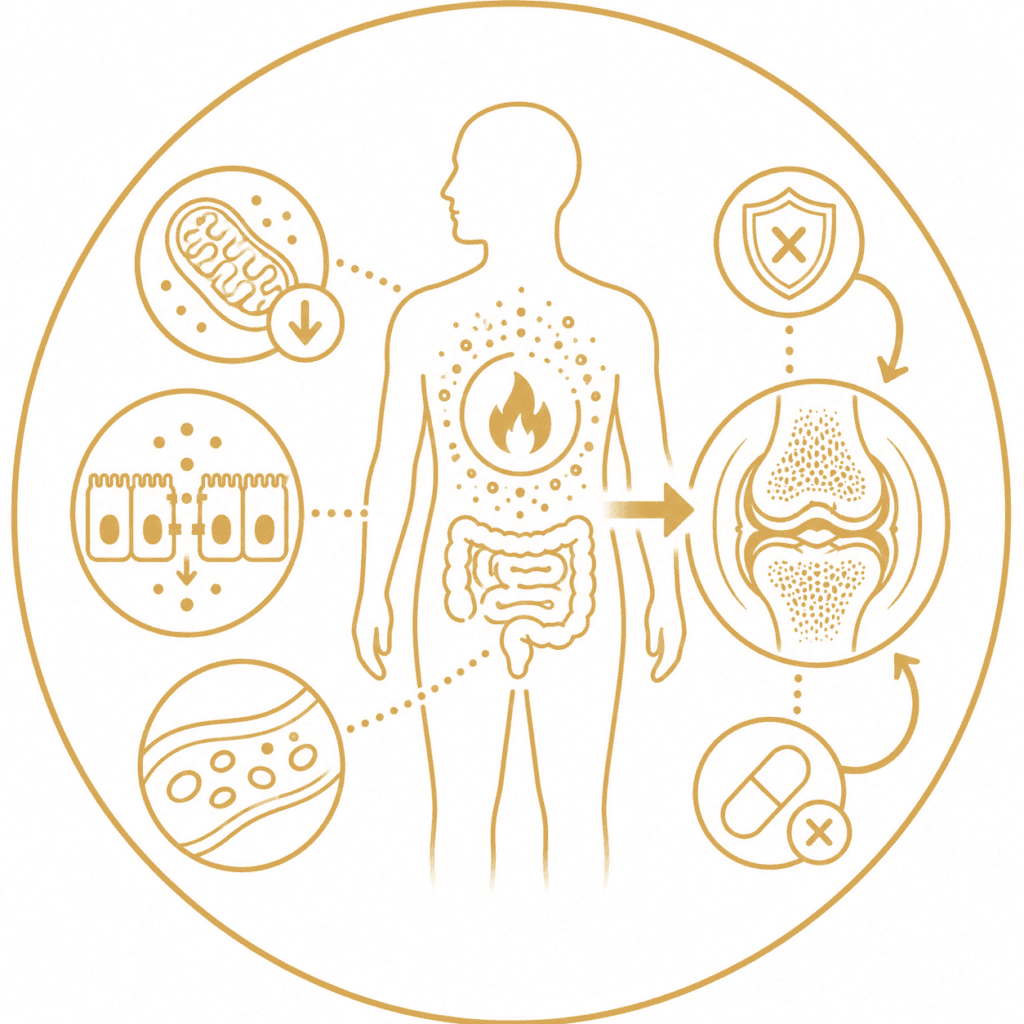
Environmental Toxins & Heavy Metals
Lead, mercury, cadmium, and arsenic accumulate in tissues over years — disrupting mitochondrial function, impairing intracellular signaling, interfering with hormonal regulation, and blocking the cellular repair mechanisms that regenerative therapy is trying to activate.
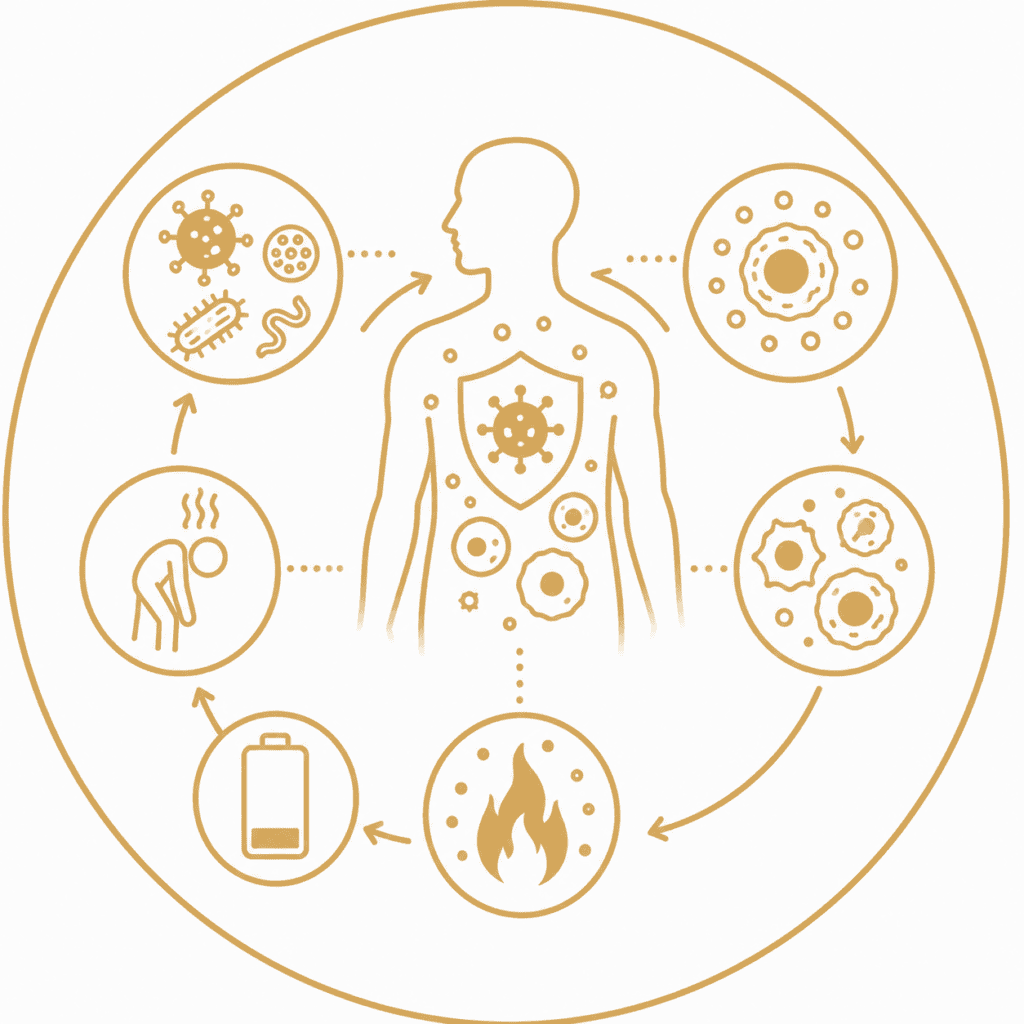
Chronic infections
Persistent viral (EBV, CMV, HHV-6), bacterial, and parasitic infections maintain chronic immune activation — diverting regenerative resources, exhausting the immune system, and sustaining the systemic inflammation underpinning many fatigue and multi-system conditions.
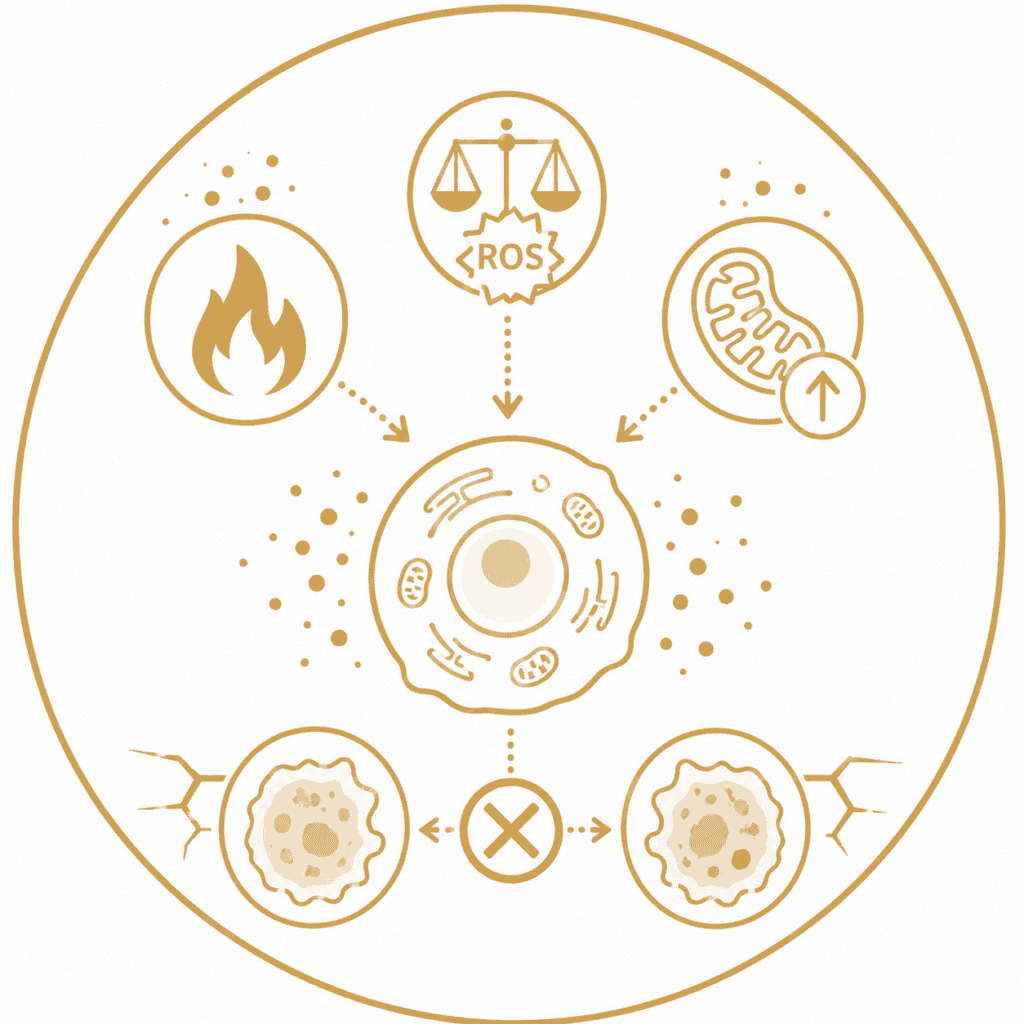
Inflammatory & metabolic overload
Chronic low-grade inflammation, oxidative stress, and metabolic acidosis create a biological environment in which cells cannot repair themselves effectively — even when all the necessary signals are present.
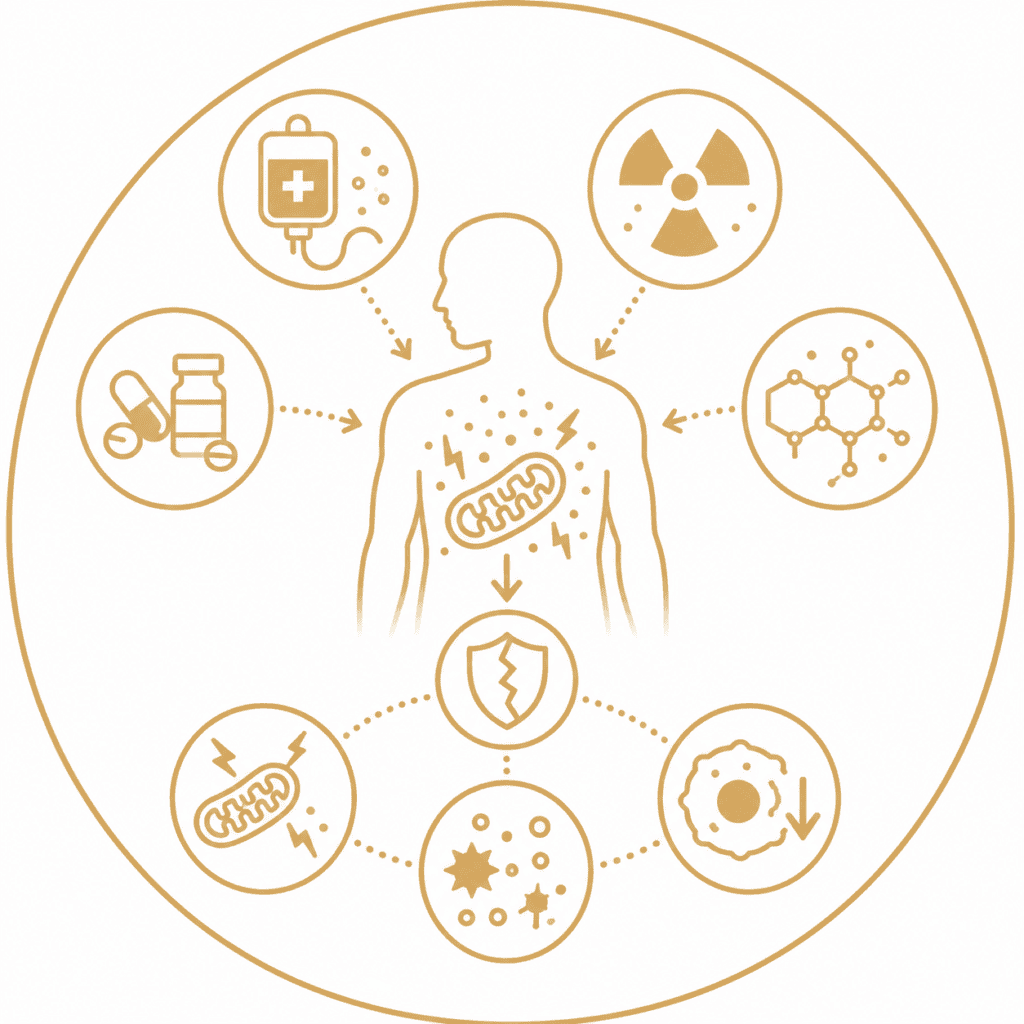
Post-treatment burden
Chemotherapy, radiation, and prolonged pharmaceutical exposure leave toxic legacies — mitochondrial damage, oxidative injury, and immune exhaustion that conventional medicine rarely addresses once treatment ends.
Technology
Role in recovery & detoxification
Key signals
Ozone Apheresis (EBOO)
DETOX · EXTRACORPOREAL
The most powerful systemic detoxification modality in our protocol. Blood is processed extracorporeally through an ozone-infused circuit — eliminating circulating toxins, pathogens, and inflammatory mediators without placing excretory burden on the liver or kidneys. Simultaneously upregulates endogenous antioxidant systems (superoxide dismutase, glutathione peroxidase) and improves oxygen delivery to all tissues. The preferred modality where renal or hepatic function is compromised.
- Extracorporeal toxin removal
- Pathogen reduction
- Antioxidant upregulation
- Tissue oxygenation
- Liver & kidney safe
Targeted IV Protocols
IV · CHELATION · NUTRIENTS
Chelation protocols — EDTA, DMSA, or DMPS selected according to the toxic burden and the patient’s renal capacity — facilitate mobilization and elimination of heavy metals. Combined with high-dose IV micronutrients (glutathione, vitamin C, magnesium, B complexes, zinc), these protocols restore the nutritional infrastructure that chronic toxic exposure depletes. Agent and dose are always calibrated to organ function; EBOO is used as the primary modality where renal function limits chelation.
- Heavy metal clearance
- Glutathione repletion
- Nutritional restoration
- Cellular protection
Infection clearance
ANTIMICROBIAL · IMMUNE SUPPORT
Chronic infections are assessed and treated as a structural component of the program. Targeted antiviral, antibacterial, and antiparasitic protocols reduce persistent immune activation. Immune reconstitution support rebuilds the adaptive immune capacity that chronic infection progressively depletes, enabling sustained clearance after discharge.
- Viral load reduction
- IV ozone antimicrobial
- Immune reactivation
- Adaptive immunity support
Pluripotent Stem Cells & Exosomes
PSC · REGENERATIVE
Introduced as the detoxification phase reduces biological burden — repairing tissues damaged by toxic or inflammatory exposure: mitochondrial dysfunction, immune exhaustion, organ tissue damage, and neurological sequelae of post-viral syndromes. In many programs the phases run in parallel, with detox progressively opening the environment as regenerative signals are delivered.
- Mitochondrial repair
- Immune reconstitution
- Organ tissue recovery
- Neurological repair
- Post-viral recoveryNeurological repair
Chelation and Organ-Specific Planning
Chelation agents require functioning renal and hepatic elimination pathways to safely excrete bound toxins. Dose selection and agent choice are always calibrated to the patient’s organ function. In cases of significant renal impairment, EBOO is used as the primary detoxification modality because it operates extracorporeally — removing toxins from circulation without placing excretory demand on the kidneys.

How the Recovery and Detoxification Protocol Works
Clinical Assessment & Burden Mapping
Toxic, infectious, and inflammatory burden is assessed at program outset — infection screening, metabolic markers, and organ function. This clinical picture determines which modalities are appropriate, in what sequence, and at what intensity.
EBOO & Systemic Detoxification
Ozone apheresis sessions reduce circulating toxins, pathogens, and inflammatory mediators — improving tissue oxygenation and upregulating antioxidant defenses. Pace is calibrated to the patient's tolerance and clinical response.
Chelation & IV Nutritional Repletion
Where organ function permits, targeted chelation mobilizes and eliminates specific heavy metals. Concurrent high-dose IV nutrients restore the glutathione, minerals, and cofactors that toxic burden depletes — rebuilding the cellular infrastructure that regenerative therapy depends on.
Infection Treatment & Immune Support
Identified chronic infections are treated using targeted antimicrobial protocols and IV ozone. Immune reconstitution support helps the adaptive immune system recover its capacity to maintain clearance after discharge.
Regenerative Signaling
Pluripotent stem cells and exosomes are introduced as the biological environment improves — repairing tissues damaged by chronic toxic and inflammatory exposure, restoring mitochondrial function, and reestablishing systemic signaling capacity.
Dietary, Gut & Lifestyle Support
Detoxification is sustained by addressing the inputs that reload the burden: dietary triggers, gut dysbiosis, environmental exposures, and nutritional deficiencies that impair the body's own detox pathways. Personalized guidance and TCM-inspired supplementation continue after discharge.
Recovery & Detoxification Concerns We Address
Heavy Metal Toxicity
Lead · Mercury · Cadmium · Chelation
ME/CFS
Immune · Mitochondrial · Post-viral
Chronic Infections
EBV · CMV · HHV-6 · Parasitic
Post-Viral Syndromes
Long COVID · Fatigue · Neurological
Chronic Fatigue & Systemic Exhaustion
Energy · Mitochondrial · Multi-system
Drug & Environmental Toxicity
Pharmaceutical · Mold · Chemical
Post-Chemotherapy & Radiation Recovery
Oxidative · Immune · Mitochondrial
Detoxification as a Foundation for Regenerative Care
For most patients, detoxification is not a separate program — it is a dimension of every protocol we design. Whether the primary goal is neurological repair, cardiovascular regeneration, immune rebalancing, or metabolic restoration, removing the toxic and infectious burden that perpetuates dysfunction is integral to the outcome.
Conditions such as ME/CFS and mast cell activation syndrome involve overlapping immune, mitochondrial, and toxic pathways that require this combined approach as their primary therapeutic framework.

Regeneration begins where interference ends. At Blast Institute, we clear the path — so the body can restore itself with the full capacity it was always capable of.