
Renal & Kidney Health Support
Restoring Filtration. Preserving Balance.
The kidneys are essential to the body’s equilibrium — regulating fluid balance, filtering metabolic waste and environmental toxins, maintaining mineral homeostasis, and actively influencing cardiovascular and metabolic function. When kidney function declines, the consequences are systemic and progressive.
At Blast Institute, we do not simply manage the decline. Our protocols — combining pluripotent stem cell therapy with Klotho gene therapy — have demonstrated measurable, structural reversal of kidney function in patients who had exhausted conventional options.

What Drives Renal Decline
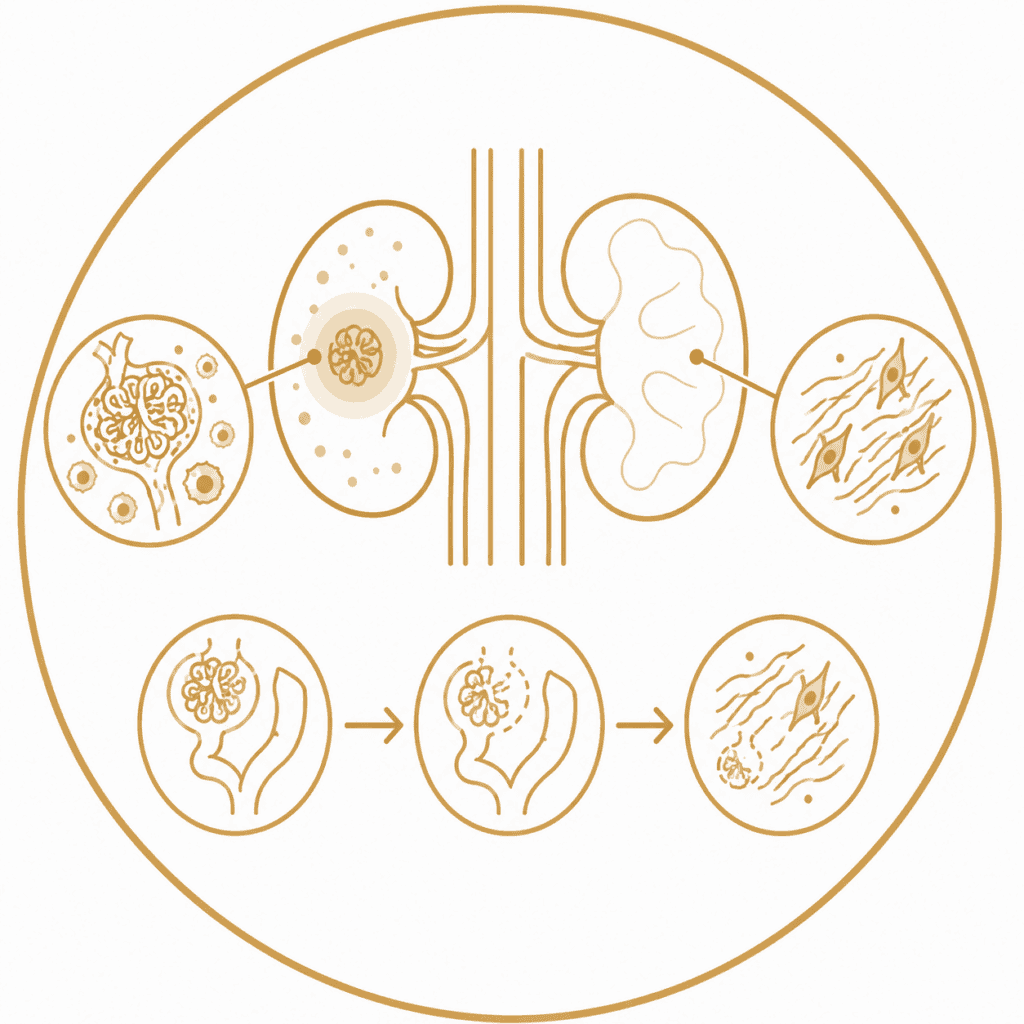
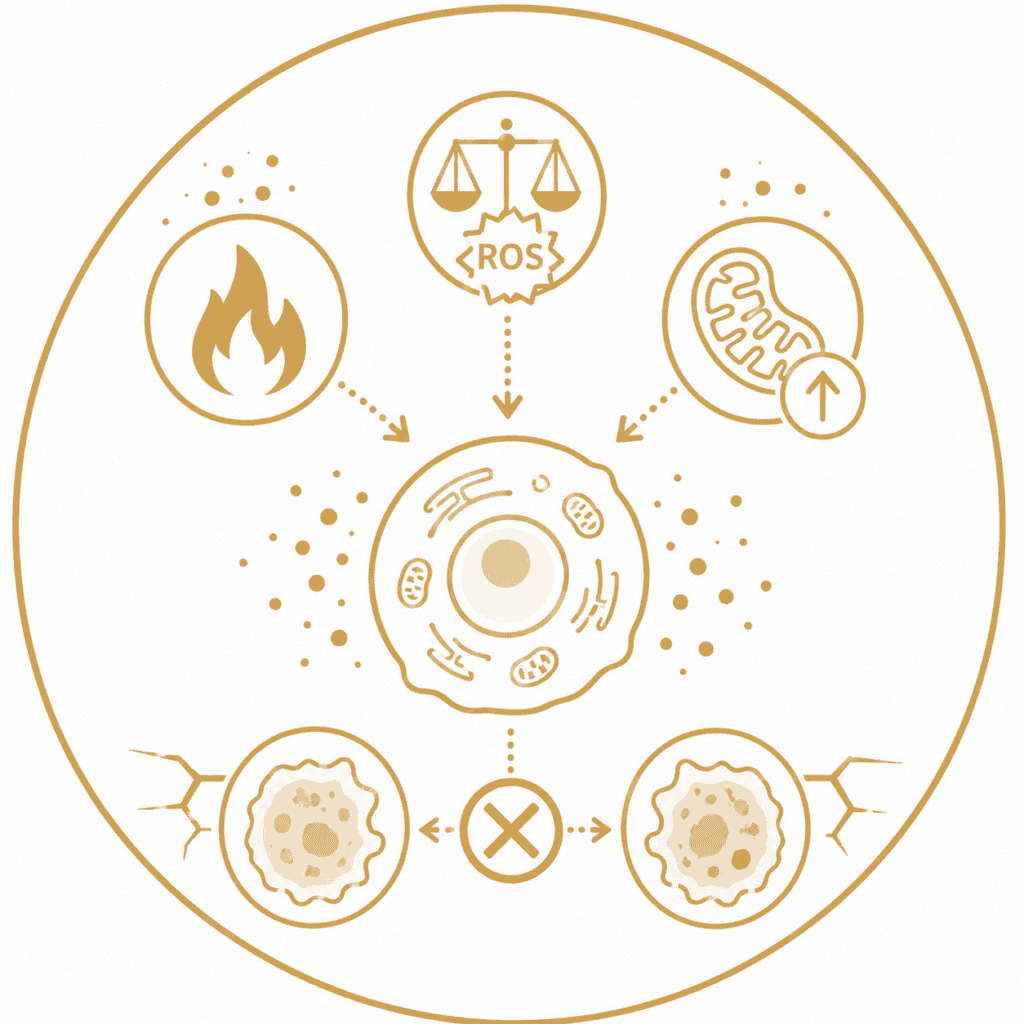
Chronic Renal Inflammation & Fibrosis
Persistent glomerular and tubulointerstitial inflammation drives progressive nephron loss and fibrotic remodeling — the structural deterioration at the core of CKD progression.
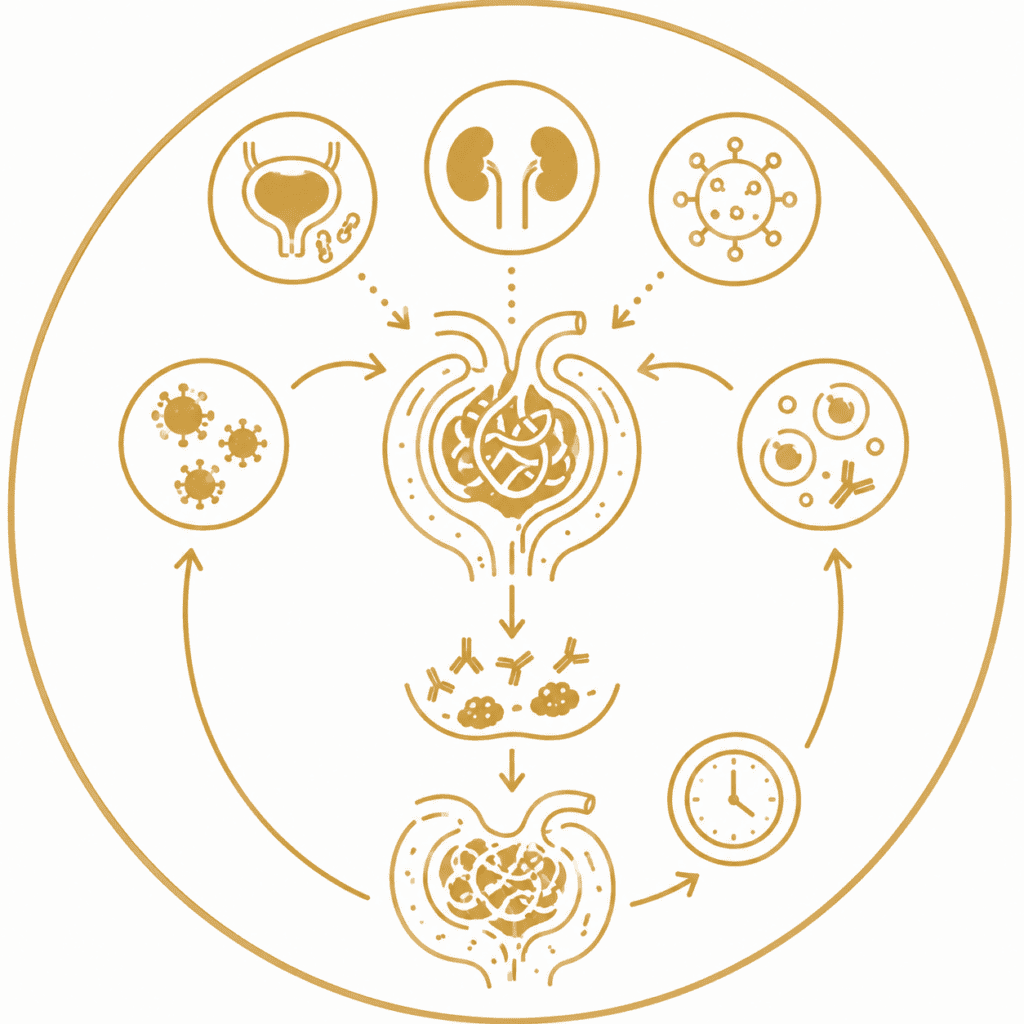
Chronic & recurrent infections
A frequently underrecognized cause. Recurrent UTIs, chronic pyelonephritis, and persistent viral infections (EBV, CMV, BK virus) maintain immune activation, drive glomerular immune complex deposition, and accelerate nephron damage over time.
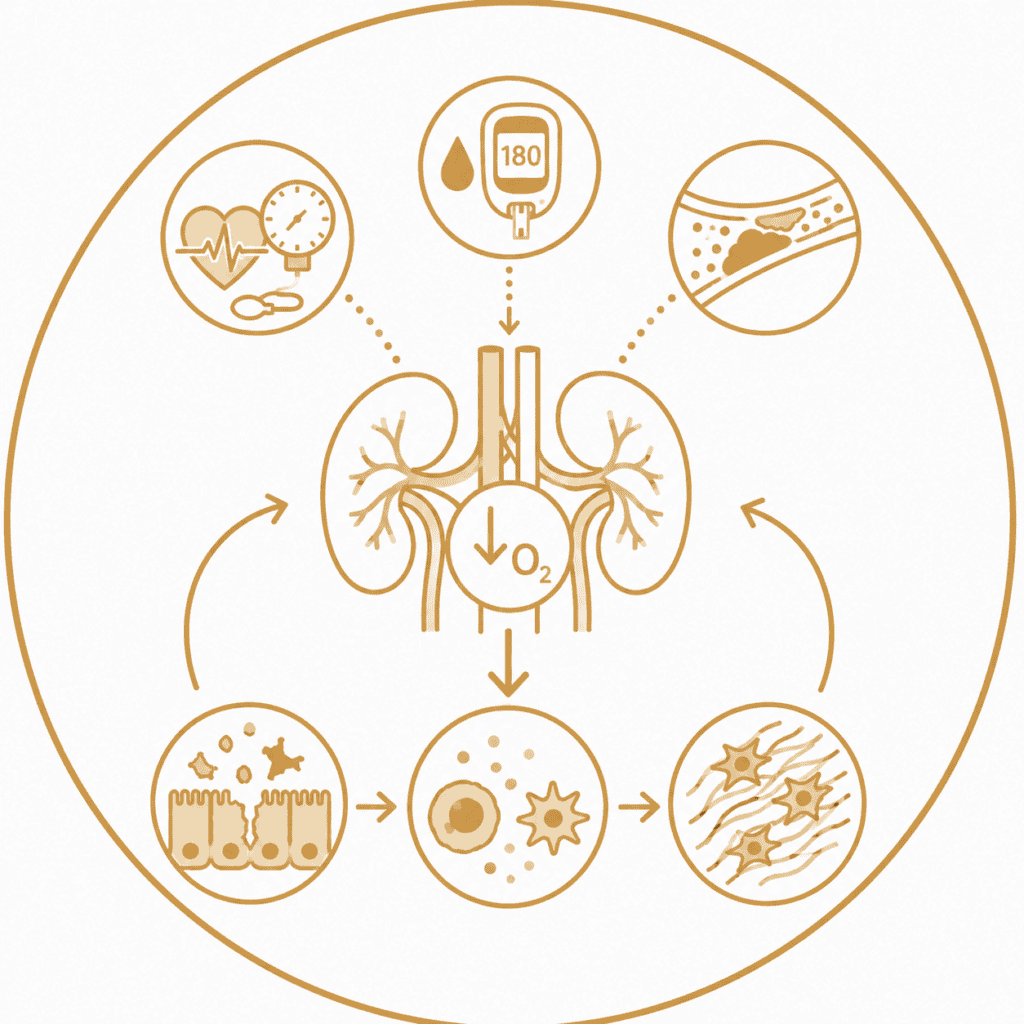
Vascular insufficiency
Reduced renal perfusion — from hypertension, diabetes, or systemic vascular disease — impairs oxygen delivery to nephrons, accelerates tubular injury, and perpetuates the inflammation-fibrosis cycle.
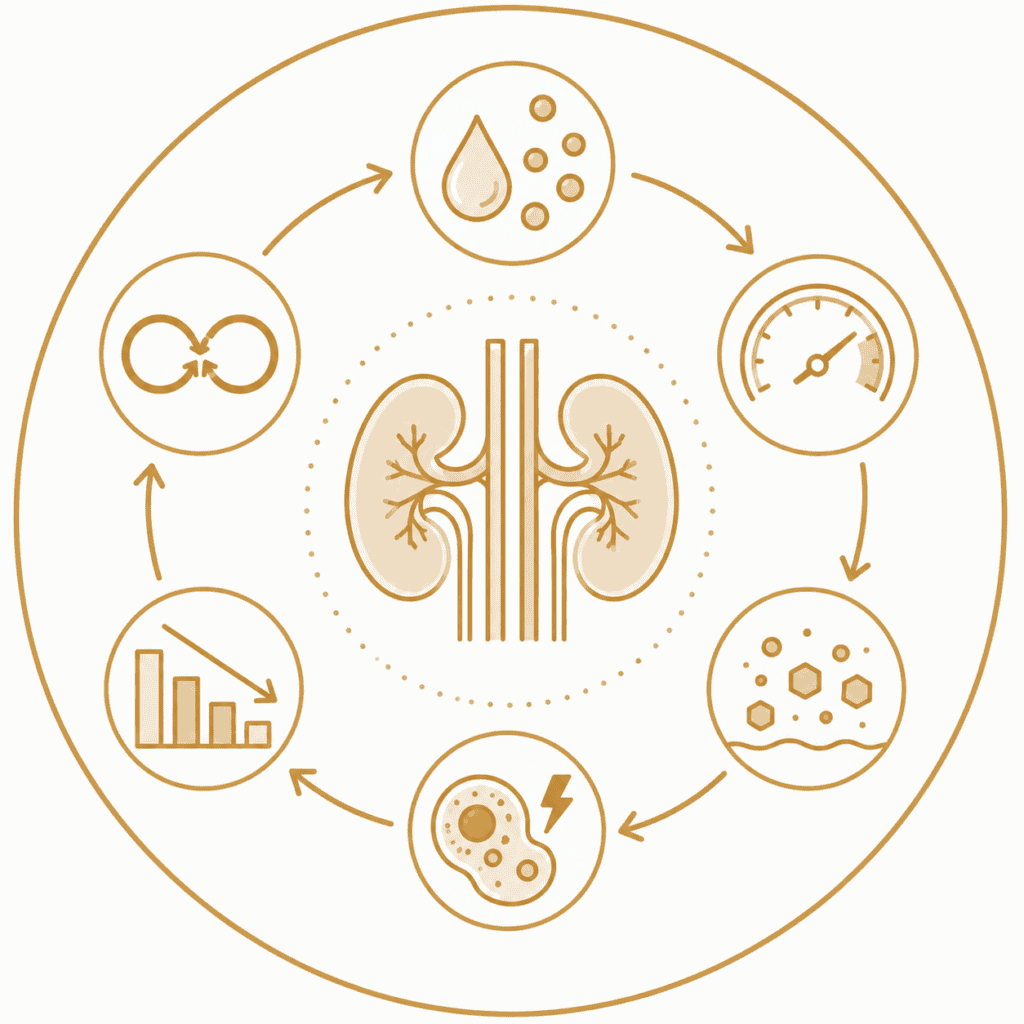
Metabolic & toxic burden
Heavy metal accumulation, chronic metabolic acidosis, and uremic toxin retention compound renal damage — both as causes and consequences of declining kidney function, creating a self-reinforcing cycle that requires systemic intervention.
Clinical Observations & Kidney Health Outcomes
Klotho Minicircle Therapy: Preliminary Clinical Observations
BLAST LONGEVITY, LOS CABOS · MARCH 2026 · B. HANLY PHD
Across five patients treated with pluripotent stem cells and Klotho minicircle gene therapy, eGFR improved in every case where serial data were available, with creatinine declining in all four measured patients. The consistency of this pattern across independent patients of different ages, sexes, and baseline profiles argues against coincidence. Two patients with adequate longitudinal follow-up show improvements sustained at one year — suggesting lasting structural change rather than transient hormonal effect.
PATIENT L · F, 54 · RADIATION-INDUCED CKD + ACUTE INJURY
eGFR 9 → 32
Within weeks of Klotho administration following acute-on-chronic renal failure. Creatinine fell from 5.34 to 1.87 mg/dL. Attending physicians described the speed of recovery as inconsistent with the expected trajectory given the severity of the injury.
PATIENT M · M, 81 · AGE-RELATED DECLINE
eGFR 67 → 90 (+34%)
Within 3 months. Creatinine fell 31% (1.10 → 0.76 mg/dL). The largest absolute improvement in the cohort — in the oldest patient — where age-related nephron loss typically makes such gains unlikely without active intervention.
PATIENT S · M, 70 · MODERATE CKDPhase 3
eGFR 72 → 88
At 7-month follow-up. PSA declined progressively. Creatinine improved from 1.25 to 0.93 mg/dL
PATIENT D · M, 70 · 15-MONTH LONGITUDINAL FOLLOW-UP
eGFR 59 → 72
Sustained at 10 months. Neutrophil-to-lymphocyte ratio improved markedly within 2 months, indicating a shift toward reduced systemic inflammation. AFP declined substantially over the period.
Regenerative Tools for Kidney Health Support
Klotho and the kidney: a natural affinity. Klotho is predominantly expressed in the kidneys — the organ where it was first identified. Declining Klotho is both a consequence and an accelerator of CKD: impaired kidneys produce less Klotho, which removes the very renoprotective signaling the kidneys depend on. This self-reinforcing cycle is precisely what sustained gene therapy expression is designed to interrupt. The clinical data above demonstrate that it can.
Technology
Role in renal repair
Key signals
Pluripotent Stem Cells
PSC
Carry exosomal cargo relevant to both endodermal and mesodermal renal tissues — supporting tubular cell repair, reducing glomerular inflammation, improving renal microvascular function, and modulating the fibrotic remodeling that drives CKD progression. Adaptive multi-lineage output addresses the vascular, epithelial, and immune dimensions of kidney disease simultaneously.
- Tubular cell repair
- Anti-fibrotic
- Anti-fibrotic
- Renal microvascular repair
- Anti-inflammatory
Pluripotent Exosomes
EXOSOMAL
Concentrated vesicles carrying anti-inflammatory mediators, anti-fibrotic signals, and microRNAs that modulate gene expression in renal tubular and mesangial cells. Reduce TGF-β-driven fibrotic signaling within renal tissue, improve mitochondrial function in energy-demanding tubular cells, and support the intercellular communication on which nephron homeostasis depends.
- TGF-β modulation
- Tubular mitochondrial support
- Anti-fibrotic miRNA
- Nephron homeostasis
Klotho Minicircle Therapy
GENE THERAPY
Expressed predominantly in the kidneys, Klotho directly supports filtration function, suppresses renal fibrosis, regulates phosphate and calcium balance, and protects tubular cells from oxidative injury. Delivered via non-viral minicircle DNA — a single subcutaneous injection elevates plasma Klotho within 7–10 days and sustains expression for 8–14 months. Clinical data demonstrate consistent eGFR improvement across all treated patients, including cases of severe impairment previously considered unlikely to recover.
- Filtration support
- Fibrosis suppression
- Tubular protection
- Phosphate regulation
- 8–14 month effect
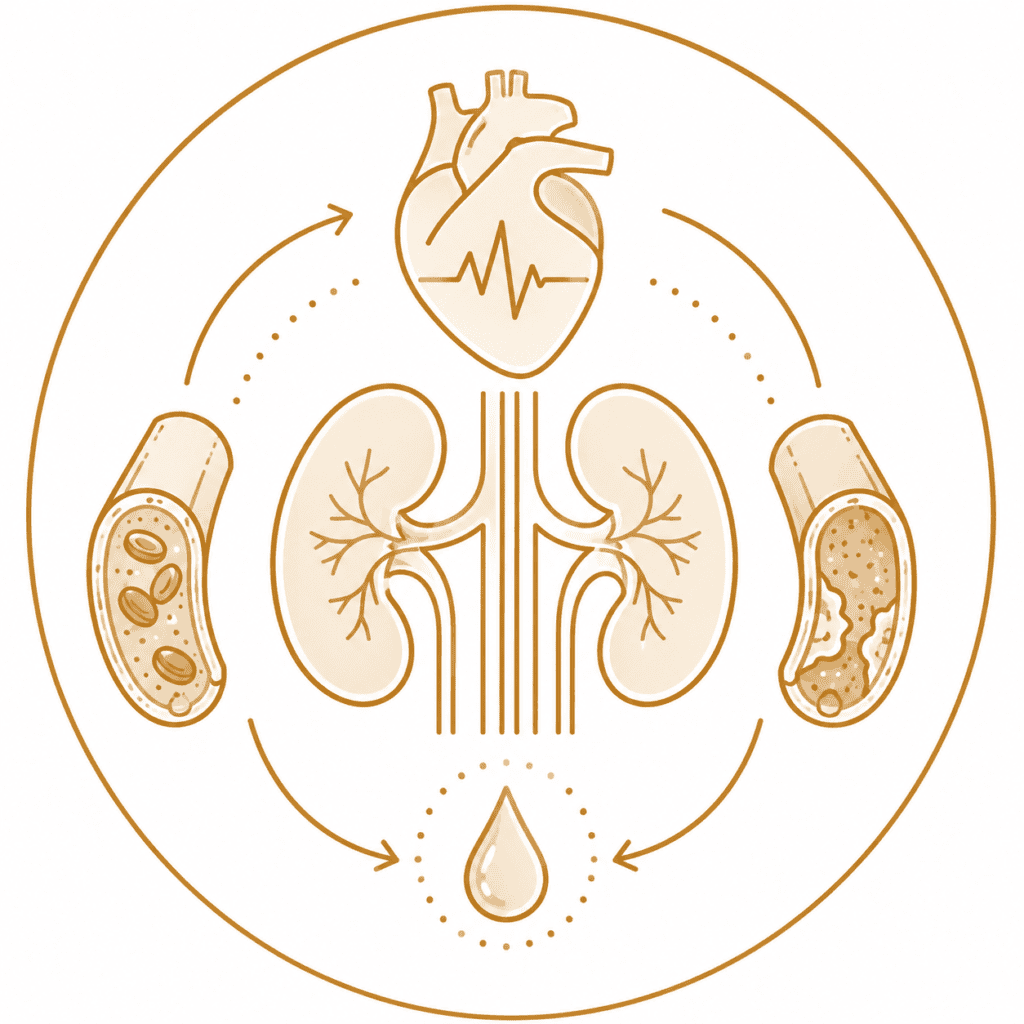
CARDIOVASCULAR
Vascular Perfusion
Cardiovascular regenerative support improves renal perfusion directly. Addressing vascular disease reduces the ischemic burden driving nephron loss.
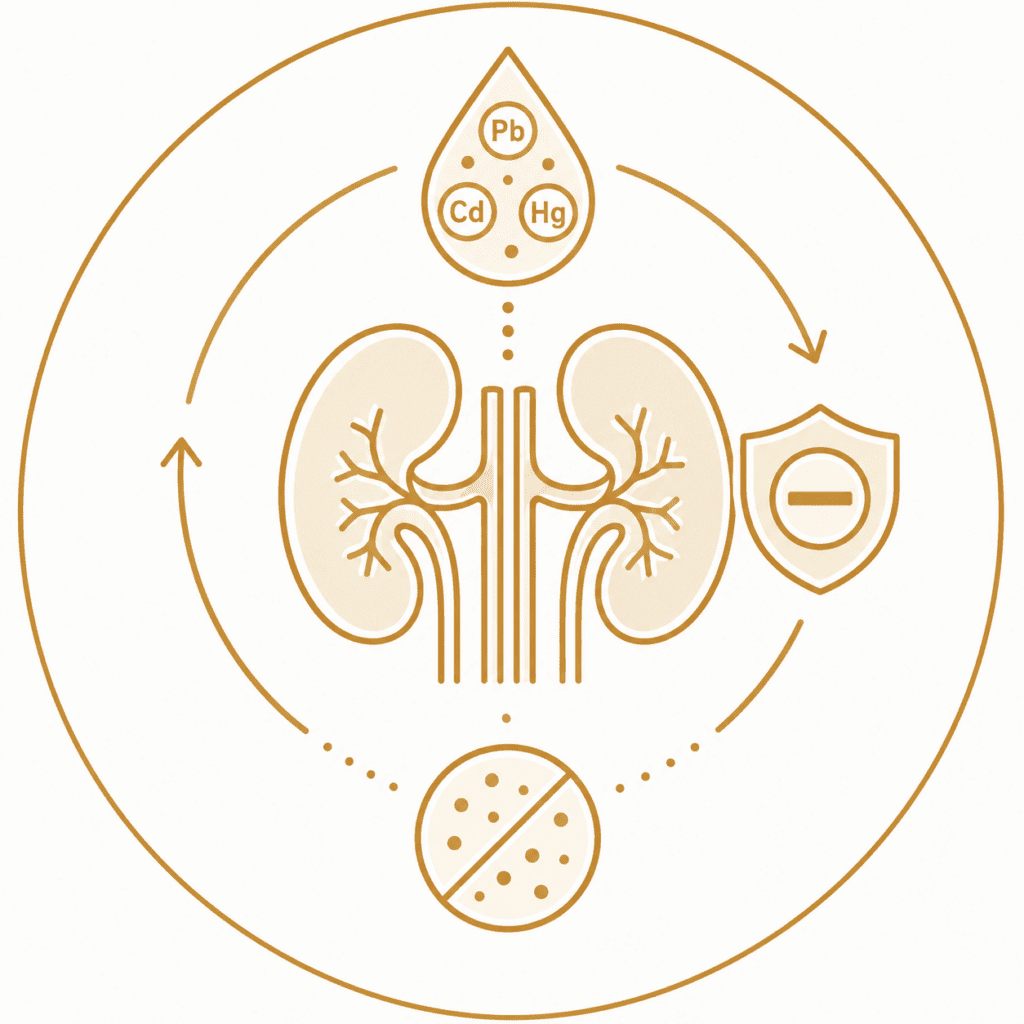
DETOXIFICATION
EBOO Over Chelation
In severe CKD, standard IV chelation is contraindicated — the kidneys must excrete the chelate-metal complex and cannot safely bear that burden. Ozone apheresis (EBOO) removes toxins extracorporeally, requiring no renal elimination.
INFECTION
Clearing the Trigger
Chronic infections are identified and treated as part of every renal protocol — removing the persistent immune activation that drives ongoing glomerular damage and prevents recovery.
How the Kidney Health Protocol Works
Systemic Burden Reduction via EBOO
Ozone apheresis reduces circulating toxins, inflammatory mediators, and metabolic waste extracorporeally — lowering the filtration burden on compromised kidneys without requiring renal elimination. This is the preferred detoxification modality in CKD precisely because it bypasses the kidney entirely.
Infection Assessment & Clearance
Chronic and recurrent infections — urinary tract, pyelonephritis, and viral (EBV, CMV, BK virus) — are assessed at program outset and treated where present. Removing this persistent immune activation is a prerequisite for sustained renal recovery.
Pulsed Daily Infusions
Each IV session delivers adaptive regenerative signals supporting tubular repair, modulating glomerular inflammation, and improving microvascular perfusion of renal tissue. Cumulative sessions progressively address structural and functional dimensions simultaneously.
Klotho Gene Therapy
Administered as a single subcutaneous injection during or at the close of the program. Plasma Klotho rises within 7–10 days and remains elevated for 8–14 months — sustaining the anti-fibrotic, anti-inflammatory, and filtration-supporting signaling that declining kidney function progressively loses.
Functional Improvement & Structural Recovery
Clinical data show measurable eGFR improvement in every treated patient. Improvements appear to reflect lasting structural change — reduced fibrosis and restored tubular function — that persists beyond the acute signaling window, as evidenced by outcomes sustained at one-year follow-up.
Kidney Conditions We Address
Chronic Kidney Disease (CKD)
Filtration · Fibrosis · Progressive
Infection-Driven Kidney Disease
Pyelonephritis · Viral · Glomerulitis
Diabetic Nephropathy
Metabolic · Glomerular · CKD stage
Hypertensive Kidney Disease
Vascular · Perfusion · Pressure
Radiation-Induced Renal Damage
Structural · Post-treatment · Fibrotic
Early & Moderate Renal Decline
eGFR · Preventive · Functional
The kidneys do more than filter — they maintain the body’s internal balance. At Blast Institute, we restore the systems that protect that balance — and the clinical data show that even in severely compromised kidneys, meaningful structural recovery is possible.