
Respiratory & pulmonary health Support
Restoring Oxygen. Rebuilding Capacity.
Breathing is the foundation of life. Every cell depends on oxygen to produce energy, repair itself, and function optimally. When lung function declines — through inflammation, fibrosis, or structural damage — the effect cascades outward: energy drops, recovery slows, and every system that depends on oxygen delivery is compromised.
At Blast Institute, we approach respiratory health as a system of exchange — where airflow, circulation, and cellular signaling must work in harmony to restore and maintain pulmonary capacity.

What Drives Pulmonary Decline
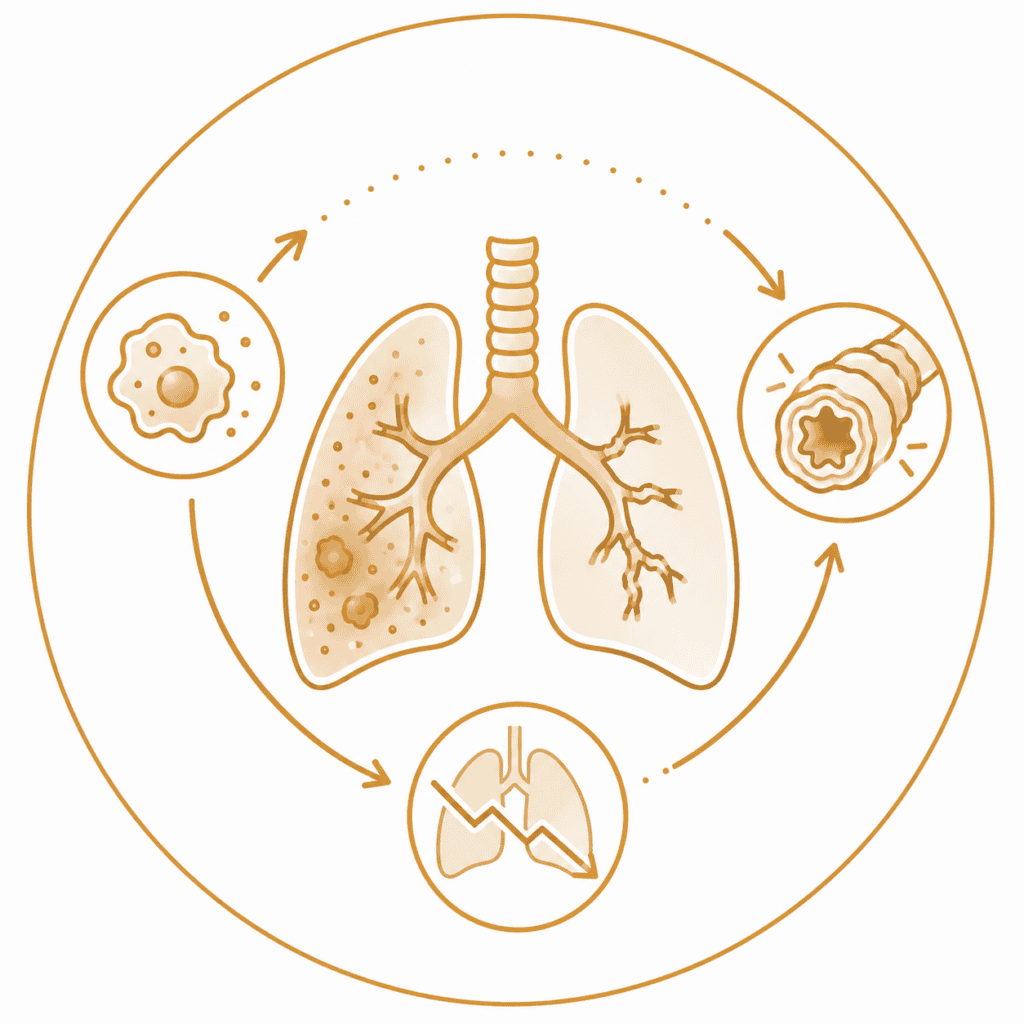
Chronic airway inflammation
Persistent inflammatory signaling damages bronchial epithelium, narrows airways, and drives the progressive loss of lung function characteristic of COPD and chronic bronchitis.
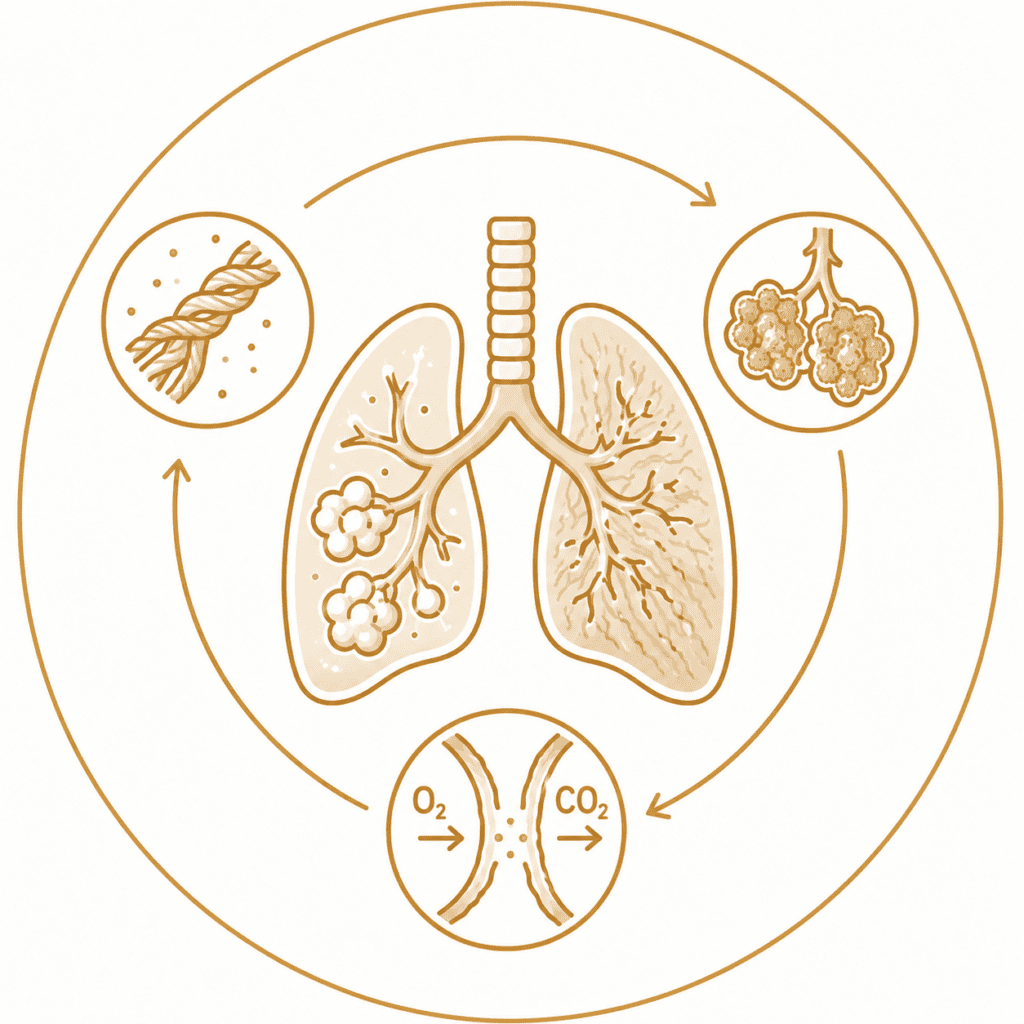
Fibrosis & structural remodeling
Excessive collagen deposition replaces functional alveolar tissue with scar tissue — reducing the lung’s capacity for gas exchange and making each breath less efficient.
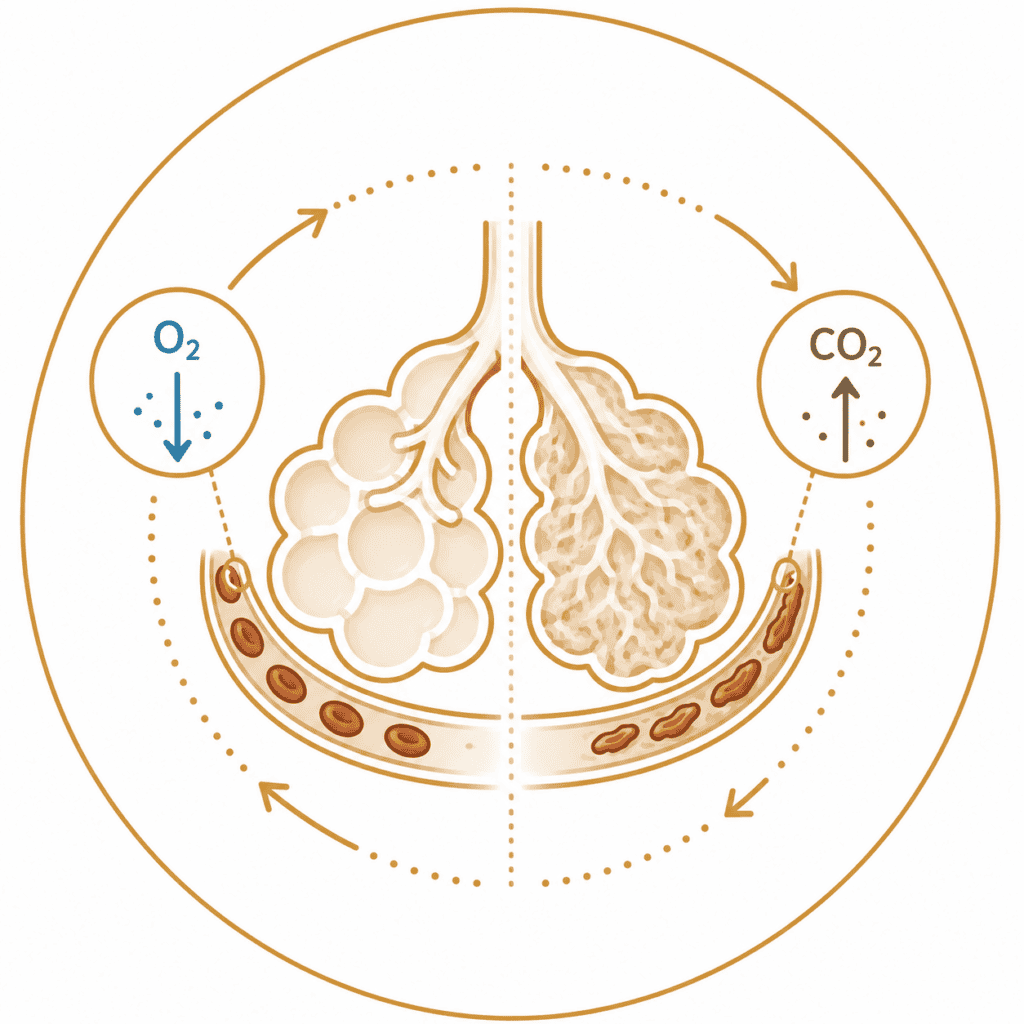
Impaired oxygen exchange
Damage to the alveolar-capillary interface reduces the surface area and diffusion capacity through which oxygen passes into the bloodstream and CO₂ is cleared.
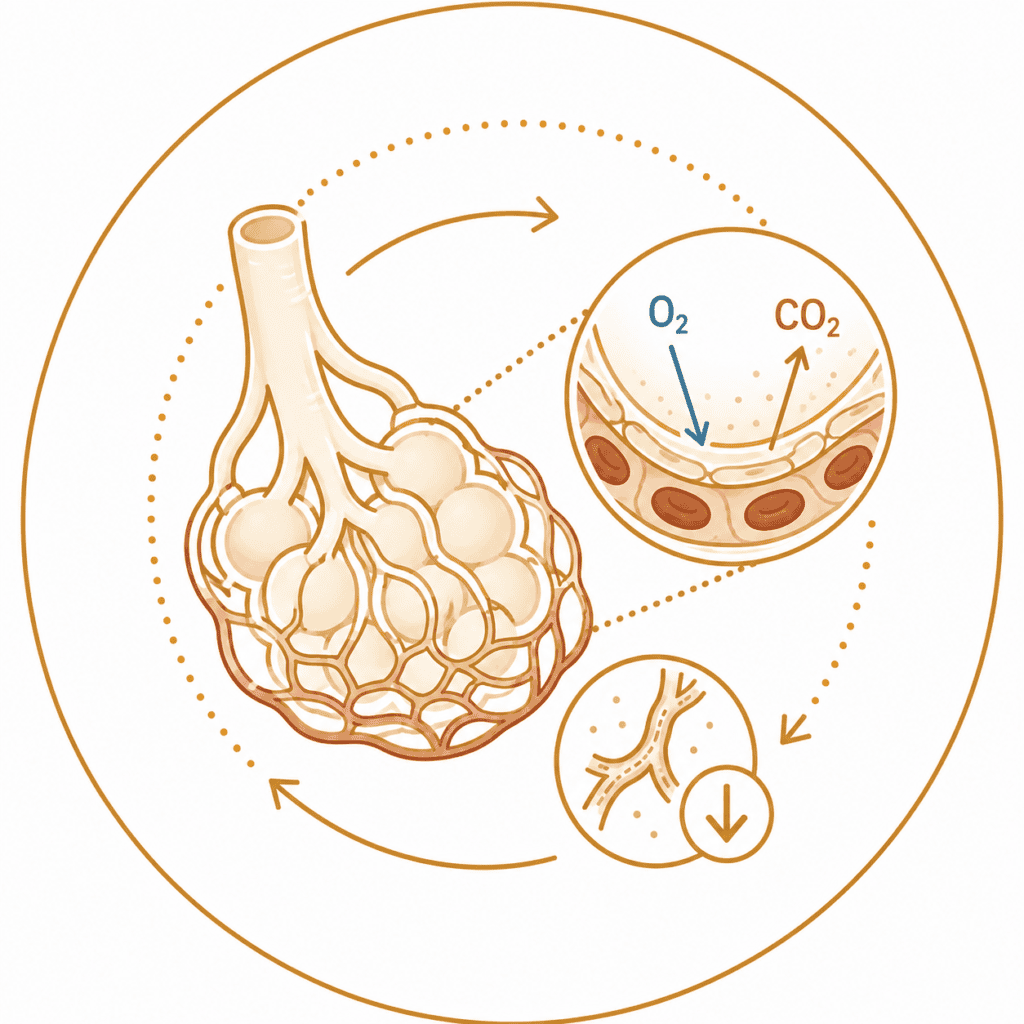
Reduced pulmonary vascular support
Microvascular dysfunction within the lung limits perfusion of alveolar tissue, compounding gas exchange impairment and accelerating tissue deterioration.
The Regenerative Technology Platform
A natural pulmonary affinity. When administered intravenously, pluripotent stem cells undergo a first-pass interaction with the pulmonary vasculature before distributing systemically. This gives lung tissue early and direct exposure to regenerative exosomal signals — a meaningful advantage in respiratory applications.

Technology
Role in Immune Regulation
Key Signals
Pluripotent Stem Cells
PSC
Systemic IV administration places PSCs in direct contact with pulmonary vasculature during first-pass circulation, giving lung tissue priority exposure to exosomal repair signals. Broad cargo — including anti-inflammatory mediators, epithelial growth factors, and anti-fibrotic signals — supports structural repair and functional recovery across the respiratory tract.
- Anti-fibrotic signaling
- Epithelial repair
- Anti-inflammatory
- Pulmonary first-pass
Pluripotent Exosomes
EXOSOMAL IV + NEBULIZATION*
Delivered intravenously for systemic and pulmonary-vascular effects. In select cases, and at practitioner discretion, exosomes may also be administered via nebulization — allowing direct deposition onto airway epithelium to modulate local inflammation and support mucosal repair at the site of damage. Nebulization is a targeted adjunct, applied when clinically indicated rather than as a standard component of every session.
- Airway epithelial repair
- Mucosal modulation
- Anti-inflammatory
- Adjunct nebulization*
Klotho Minicircle Therapy
GENE THERAPY
Documented protective effects against pulmonary aging, oxidative stress, and inflammatory injury. Delivered via non-viral minicircle DNA for sustained expression of 8–14 months, it supports systemic resilience, reduces the oxidative and inflammatory burden that accelerates lung tissue deterioration, and contributes to long-term maintenance of pulmonary function.
- Oxidative stress ↓
- Pulmonary protection
- Systemic resilience
- 8–14 month effect
* Nebulized exosome delivery is a clinical adjunct applied at practitioner discretion based on individual presentation — not a standard component of every session.
How the Pulmonary Health Protocol Works
Terrain Preparation
Systemic oxidative and inflammatory burden reduces the effectiveness of regenerative signals in damaged lung tissue. Ozone apheresis and IV antioxidant protocols reduce this burden before and during treatment — improving the pulmonary environment for cellular signaling.
Pulsed Daily IV Infusions
Each session delivers systemic regenerative signals with direct pulmonary-vascular exposure during first-pass circulation. Protocol frequency and composition are determined by the clinical team based on the patient's condition and daily response.
Nebulized Exosomes (Where Indicated)
For patients where direct airway delivery is clinically indicated, nebulized exosome administration may be integrated into the program at the discretion of the treating physician. This targeted adjunct is not a standard daily component but a precision tool applied when the clinical picture calls for it.
Gene Therapy Extension (Optional)
A single Klotho minicircle administration at program completion provides 8–14 months of continued oxidative and inflammatory protection — sustaining the systemic conditions that support long-term pulmonary maintenance after discharge.
Progressive Functional Recovery
Measurable gains in oxygen saturation, exercise tolerance, and breathlessness develop progressively as inflammation resolves, fibrotic remodeling slows, and vascular support to lung tissue is restored.
Respiratory & Pulmonary Conditions We Address
COPD
Obstructive · Emphysema · Progressive
Pulmonary Fibrosis
Fibrotic · Alveolar · Restrictive
Chronic Respiratory Insufficiency
Oxygen exchange · Capacity · Fatigue
Post-Viral Lung Damage
Long COVID · Inflammatory · Recovery
Inflammatory Lung Conditions
Bronchial · Mucosal · Chronic
Oxygen is not just breath — it is the energy that sustains every cell. At Blast Institute, we restore the capacity to receive it — addressing the inflammation, fibrosis, and vascular insufficiency that stand between damaged lung tissue and functional recovery.