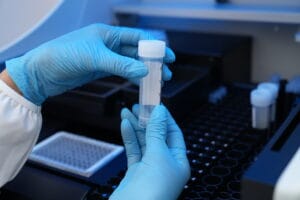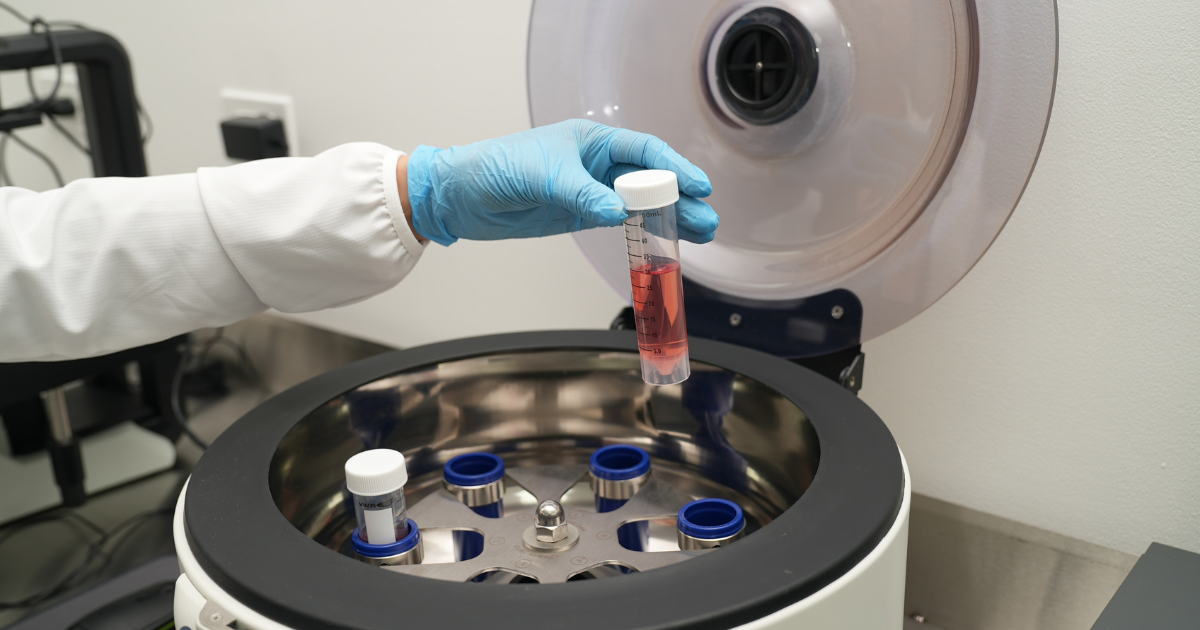
This week, Bryan Johnson published something most people have never seen: his own cells, reprogrammed back to a pluripotent state, sitting in a petri dish. He called it “baby-bryan,” and millions of people read it. The technique behind that image has a name, cellular reprogramming, and now that it has reached a mainstream audience, this is a good moment to explain what it is and what the headlines are missing.
We were glad to see it. It is not every day that pluripotency trends on social media, or that a mainstream audience meets the idea that the body’s repair capacity might be restorable rather than simply managed.
Credit where it is due. Johnson is right about the core science: pluripotent stem cells can differentiate into a very wide range of cell types, and because they originate from the patient, immune rejection is not the barrier it would be with donor material. He is also right that they are worth taking seriously in autoimmune conditions.
There are two things worth adding. The first is a small, friendly correction about what is actually in that dish. The second is about method, and it is the difference between a milestone and a therapy.
What Is Cellular Reprogramming
Cellular reprogramming is the process of taking an adult cell, one that has already committed to being skin or blood or muscle, and resetting its identity so that it behaves like a young, unspecialized cell again. In practice, that means winding back the epigenetic clock: the chemical marks that tell a cell which genes to switch on and off are erased and rewritten toward a more primitive, more flexible state.
This winding back is the heart of cellular reprogramming. When that reset is complete, the adult cell becomes a pluripotent stem cell. Reprogramming an adult cell with Yamanaka factors resets the epigenetic clock, well or imperfectly, which we will come to, and produces a stem cell. A remarkable one, but a stem cell, not an embryo, and not a person in miniature.
The cells in the dish are a repair kit, not a passenger.
Is a Dish of Reprogrammed Cells an Embryo
No, and this is worth saying warmly, because “baby-bryan” is a lovely image. A dish of pluripotent stem cells is not a small person and could not become one. Cellular reprogramming produces the cells that build the body’s tissues, not the supporting architecture an embryo needs, which is a distinction we return to below.
How Cellular Reprogramming Creates Induced Pluripotent Stem Cells
There is more than one way to carry out cellular reprogramming and return an adult cell to a pluripotent state, and over the past twenty years our team has worked through the major routes of stem cell reprogramming. Each is a form of cellular reprogramming, and all three can produce cells that express pluripotency markers, but they do not all produce cells that behave the same way in culture over time.
Yamanaka-factor reprogramming introduces defined transcription factors to reset cell identity. This produces induced pluripotent stem cells (iPSCs), and it is the method described in Johnson’s post.
Small-molecule reprogramming attempts the same reset chemically, using compounds rather than transcription factors.
Somatic cell nuclear transfer (SCNT) places the nucleus of an adult cell into an enucleated oocyte, and the oocyte’s own cytoplasmic machinery performs the reset.
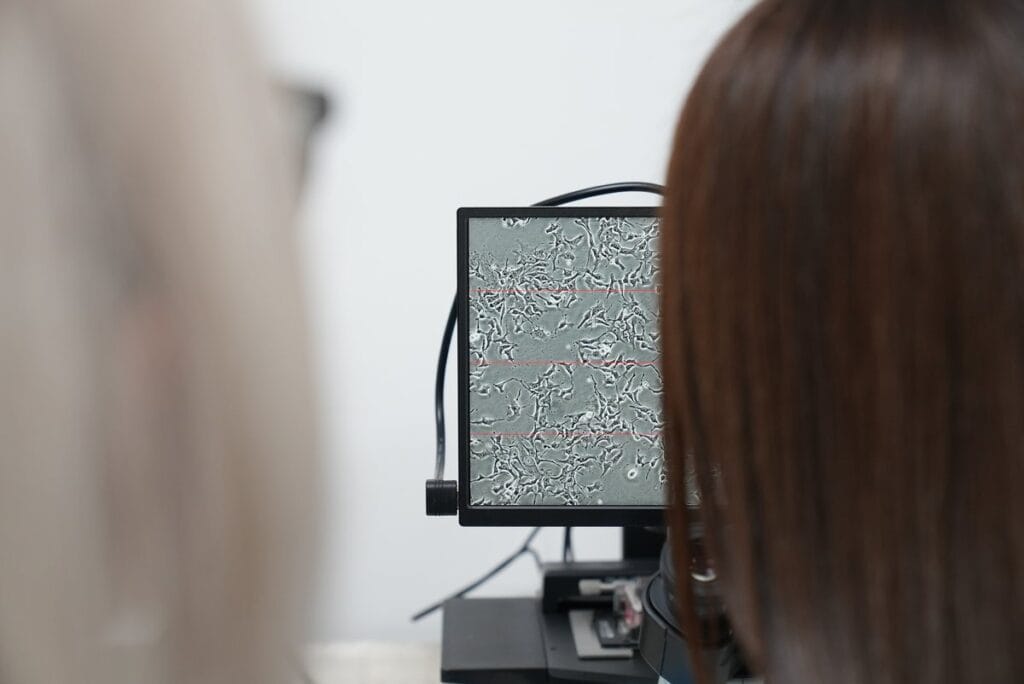
What Does the Literature Show About iPSCs
Not all cellular reprogramming is equal, and the method shapes how reliable iPSC therapy can be. The most useful summary remains Narsinh, Plews and Wu in Molecular Therapy (2011), which asked whether iPSCs and embryonic stem cells are fraternal or identical twins (1).
Reported differentiation yields from iPSCs toward neural and cardiovascular lineages are lower and more variable than from embryonic lines, and iPSC-derived early blood and endothelial cells show signs of premature senescence.
When the DNA methylome was compared at single-base resolution, roughly 45 percent of differentially methylated regions reflected a failure to fully erase the somatic cell’s epigenetic memory, while roughly 55 percent were patterns found in neither the starting cell nor in embryonic stem cells, aberrations arising from the reprogramming process itself (4). Importantly, this variability appeared whether or not the reprogramming transgenes remained in the genome, so cleaner delivery does not resolve it.
To be fair to the field, no single deviation was shared by all iPSC lines (3), and some researchers argue that residual epigenetic memory can even be used deliberately to bias a line toward a desired lineage. Our position is drawn from practice rather than polemic: when the goal is a stable autologous line that behaves predictably year after year, that variability is the whole problem.
What Makes Pluripotent Stem Cells Different
To see why the dish is a repair kit and not a passenger, it helps to look at where these cells sit in development. In early development, the fertilized egg divides into a blastocyst, a hollow sphere with two distinct populations of cells. The outer layer, the trophectoderm, goes on to build the placenta and the supporting structures. The inner cell mass, tucked inside, is what becomes the body.
Pluripotent stem cells correspond to that inner cell mass, and only that. They can make every tissue of the body, which is extraordinary, but they cannot make the placenta or the supporting architecture a developing embryo depends on.
Pluripotency is the capacity to become any cell type. It is not the capacity to become an organism.
This distinction matters beyond semantics, and it shapes how cellular reprogramming is understood by the public. It is precisely why pluripotent stem cell therapy is not the ethical minefield the public often assumes it is, and it is worth saying clearly whenever this science reaches a wide audience.
Can Pluripotent Stem Cells Become a Person
No. They correspond to the inner cell mass, the part of the early embryo that becomes the body’s tissues, not the trophectoderm that builds the placenta. Reprogrammed cells can make any tissue, but they cannot organize themselves into an organism.
Want to See How Regeneration Works as a System
Discover how Blast Institute approaches repair across the whole body, not one symptom at a time.
Why Cellular Reprogramming Matters for Regenerative Medicine
The reason cellular reprogramming matters is that it turns a patient’s own cells into a renewable source of repair. This is where stem cells and regenerative medicine meet: rather than managing a degenerative condition, regenerative medicine aims to rebuild the tissue itself, and reprogrammed pluripotent cells are one of the most versatile starting points for doing so.
Cellular reprogramming also changes what these cells can do for the immune system. Pluripotent stem cells are not only a source of replacement tissue; they are immunologically active in their own right. Johnson cited his autoimmune diagnosis as the reason he pursued this path, and that instinct is well founded.
How Does Cellular Reprogramming Relate to Autoimmune Conditions
Work published in Transplantation Immunology (2011) found that embryonic stem cells suppressed both the proliferation and the survival of CD4+ T cells in culture, and reduced secretion across a broad panel of cytokines, an effect mediated primarily through direct cell-to-cell contact (2).
That study examined alloimmune rather than autoimmune response, and we want to scope it honestly rather than overstate it. But the mechanism it describes, direct modulation of T cell behavior, is the mechanism that matters in autoimmune conditions, and it is consistent with what we observe clinically.
From Reprogrammed Cells to Real-World Therapies
Cellular reprogramming can produce a milestone in a dish, but a milestone is not yet a therapy. The gap between the two is method, because the kind of cellular reprogramming you use determines how the cells behave, and that is the focus of our clinical method.
Why We Come Back to Nuclear Transfer
This is why we keep returning to somatic cell nuclear transfer (SCNT). Where factor-based reprogramming resets the epigenome partially, and sometimes erratically, SCNT places the adult nucleus into the environment that performs this reset in nature.
The oocyte cytoplasm carries the complete remodeling machinery, and the reset it achieves is more thorough and more consistent than factor-based methods typically manage. In practice that means cleaner, more predictable lines, cells that behave the way we expect batch after batch and year after year.
For a therapy, that reliability is the whole point: it is the difference between an interesting laboratory result and something dependable enough to build a treatment on.
Why Does Blast Build the Oocyte from the Patient’s Own Cells
Because it keeps the line fully autologous. Our protocol adds one further step to SCNT: we generate the oocyte from the recipient’s own fibroblasts, so both the nuclear and the mitochondrial DNA remain the patient’s, rather than the mitochondria coming from a donor egg.
As of today, we hold more than 150 patient-derived pluripotent lines in stable culture produced this way. For a therapy meant to be used for years, that completeness is part of what keeps each line stable and predictable.
Curious How Our Method Differs
Explore how we produce stable, fully autologous pluripotent lines through nuclear transfer.
What the Headlines About Cellular Reprogramming Are Missing
Cellular reprogramming deserves the attention it is finally getting, but the coverage stops one step short of the interesting part. For regenerative medicine, the frontier is further along than the headlines suggest.
The real question is no longer whether adult cells can be returned to pluripotency; that is settled. It is which method produces lines stable and reliable enough to treat real patients, year after year.
That is the work we have been doing since before it trended, and it is why we favor the more thorough reset of nuclear transfer over the quicker, factor-based shortcuts. The headlines celebrate the moment a cell is reprogrammed. What actually matters for patients is what those cells go on to do in the months and years that follow, and whether they can be trusted to behave the same way every time.
Same mountain, different road. We are glad more people are climbing it, and if you want to understand how this science might apply to you, we would be glad to talk with our team.