At Blast Institute, we hold a simple conviction that shapes everything we do: the body already knows how to heal itself. It has done so for as long as you have been alive.
What it loses with time is not the knowledge, but the signal, the clear instruction and the steady supply of resources that keep repair humming along. Regenerative aesthetics is our name for restoring that conversation.
Instead of covering the signs of ageing, it works with your own biology, using exosome therapy and targeted growth factors to help the tissue of your face and scalp renew itself.
Nowhere is this philosophy more visible, literally, than on the skin of your face and scalp. So, when clients ask why our approach looks so different from the menu at a typical medical spa, the honest answer is that we set out to solve a different problem.
Most aesthetic medicine asks how to cover the signs of ageing. Regenerative aesthetics asks how to help the tissue become young again.
What Is Regenerative Aesthetics
Regenerative aesthetics is a way of treating the face, body, and scalp that aims to rebuild tissue rather than mask how it looks. It borrows from regenerative medicine, the science of helping the body restore its own cells, and applies it to the way you look and feel.
The idea rests on how cells communicate. As we age, what fades is not the body’s knowledge of how to repair, but the signal and the supply that drive it.
Regenerating skin, whether on the face, the body, or the scalp, comes down to three things working together: waking the tissue up, telling it what to do, and making sure it has the fuel to do it. We call these the stimulus, the instruction, and the supply, and regenerative aesthetics is simply these three working together. The rest of this article walks through each one.
How Is Regenerative Aesthetics Different from Covering the Signs of Ageing
Covering aims at appearance and lasts only as long as the product does. Regenerative aesthetics work a layer deeper, prompting your own cells to rebuild, so the improvement comes from your tissue rather than from something laid over the top of it.
Why Regenerative Aesthetics Goes Beyond Botox and Fillers
Regenerative aesthetics take a different route from the two most common cosmetic tools. Dermal fillers and neurotoxins like Botox are the two pillars of conventional cosmetic practice, and we understand their appeal, since the results are fast and visible.
But it is worth looking closely at what they actually do.
Fillers add volume by introducing a foreign material beneath the skin. They occupy space; they do not rebuild the tissue that was lost. Over time they migrate, they must be redone, and in some cases, they interfere with the skin’s own architecture.
Neurotoxins work by paralyzing the small muscles that create expression lines. The wrinkle softens because the muscle can no longer move, not because the skin has been restored.
Both approaches share the same underlying logic: they mask the appearance of ageing rather than address its biology. That logic is precisely what regenerative aesthetics leave behind.
At Blast, we have removed fillers and neurotoxins from our aesthetic practice, not because they never work, but because we believe our clients deserve an approach that works with their biology rather than around it.
Do You Still Offer Botox and Fillers
No. We have deliberately removed fillers and neurotoxins from our aesthetic practice, because regenerative aesthetics are built on restoring the tissue rather than masking it.
Curious Whether Regenerative Aesthetics Is Right for You
Speak with our patient care team about a personalized plan for your skin or scalp.
How Exosome Therapy Supports Skin Rejuvenation
For the skin of the face, regenerative aesthetics begin with a gentle stimulus and then deliver the instruction that drives skin rejuvenation.
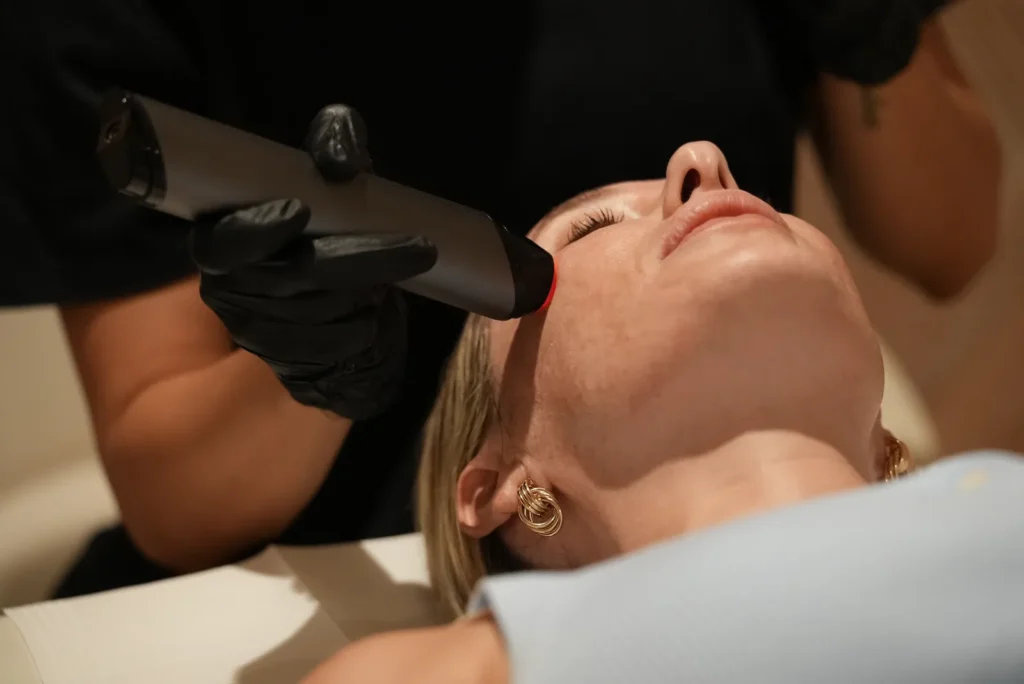
In regenerative aesthetics, before the skin rebuilds, it needs a reason to, and we give it one without destroying tissue.
Plasmage (a precision plasma device) and Jovena (which pairs plasma with radiofrequency energy) deliver controlled, non-ablative stimulation that prompts the skin’s own fibroblasts, the cells responsible for producing collagen and elastin, to begin remodeling.
Microneedling adds a mechanical version of the same invitation and does something else just as valuable: it opens temporary micro-channels in the skin, creating a direct pathway for what comes next.
What comes next is exosome therapy. When the exosome preparation is applied through those micro-channels, it carries repair instructions straight to the fibroblasts that have just been prompted to renew.
This pairing of microneedling with exosomes on the face is what many people mean by an exosome facial, and it is the heart of how we support skin rejuvenation.
We are not adding anything foreign; we are signaling your own skin to rebuild collagen, tone, and texture over the weeks that follow. If you want to see how this looks in practice, our skin rejuvenation treatments page walks through a typical course.
What Is an Exosome Facial
An exosome facial pair with a gentle delivery method, usually microneedling, with a pluripotent exosome preparation applied through the resulting micro-channels.
The aim is skin rejuvenation from within: prompting your own fibroblasts to renew rather than covering the surface. In short, regenerative aesthetics apply to the face.
Why We Use Pluripotent Exosomes and VEGF-A
In regenerative aesthetics, the instruction, and the reason our results differ, comes down to the source of the exosomes.
Exosomes are tiny vesicles that cells use to talk to one another, nature’s own messaging system, carrying growth factors and regulatory signals from one cell to the next. The distinction we insist on is where those exosomes come from.
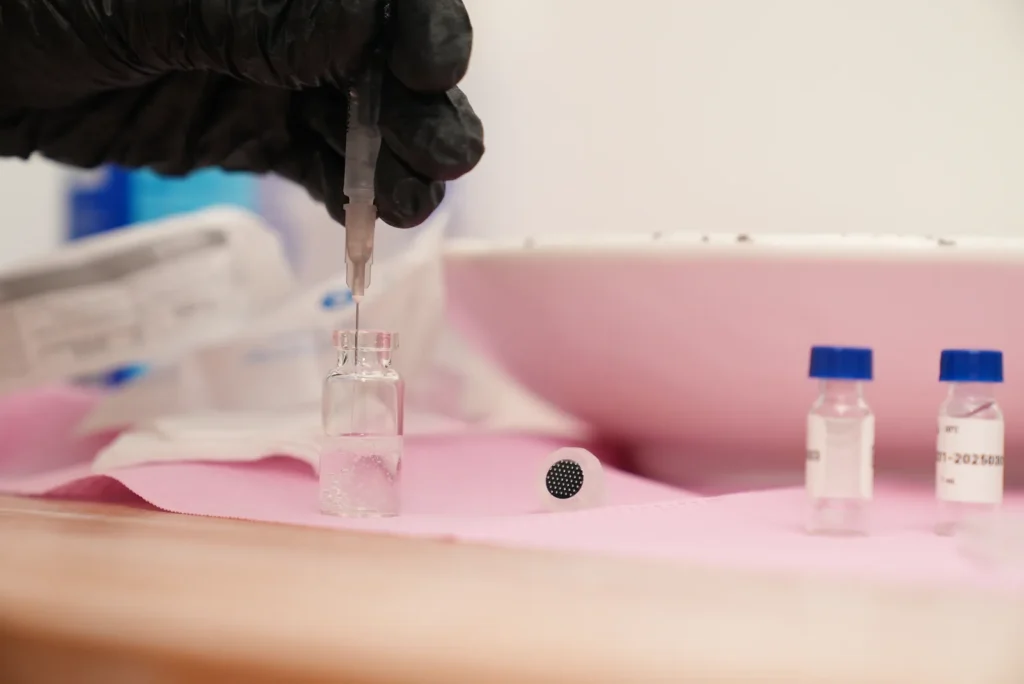
Many clinics use exosomes derived from mesenchymal stem cells (MSCs). Ours are derived from pluripotent stem cells (PSCs), the most primal, unspecialized cells in biology, from which every tissue type originates. Their signaling profile reflects that developmental potency.
Delivered through the micro-channels created by microneedling, these pluripotent exosomes carry a richer, more youthful set of repair instructions directly to the cells that need them. They do not become your skin; they tell your skin how to renew itself.
Even the best instructions fail if the tissue is starved. As skin and scalp age, one of the quiet losses is perfusion, the network of tiny blood vessels that deliver oxygen and nutrients.
VEGF-A (Vascular Endothelial Growth Factor A) is the body’s own signal for building new microvasculature, and our VEGF-A gene therapy places this instruction precisely where it is needed, prompting the local tissue to restore its own blood supply.
One point of honesty and precision: VEGF-A gene therapy acts locally. Its effect is concentrated right at the site where it is administered and fades within centimeters; it is never systemic.
For facial skin and scalp, that is exactly what you want. A targeted, localized boost in perfusion delivered to the area being treated, feeding the very cells the exosomes have just instructed.
Together, these three create a closed loop of renewal: the stimulus wakes the tissue; the pluripotent exosomes instruct it, and VEGF-A sustains the supply line that lets the repair happen.
This closed loop is regenerative aesthetics in practice.
How Are Pluripotent Exosomes Different from MSC Exosomes
Most clinics use exosomes from mesenchymal stem cells. Ours come from pluripotent stem cells, the unspecialized cells from which every tissue type originates, so their signaling carries a broader, more youthful set of repair instructions.
Ready to See What Regenerative Aesthetics Can Do for You
Book a consultation and we’ll design a protocol around your skin, your scalp and your goals.
Exosomes for Hair Loss and Hair Restoration
Within regenerative aesthetics, the same three-part logic makes this one of our most effective approaches to exosomes for hair loss and hair restoration.
Hair thinning is often framed as a men’s concern, but that picture is incomplete and leaves many people underserved. Female pattern hair loss affects roughly one in three women over the course of a lifetime, and the conventional pharmaceutical mainstay, finasteride, is contraindicated for women of childbearing age. That leaves a large population with few good options.
To understand why our approach works here, it helps to understand why hair thins in the first place. In much of hair loss, central to male-pattern balding and a contributor for many women as well, the problem is the follicle’s sensitivity to DHT (dihydrotestosterone).
DHT does not simply clog a follicle. It switches the follicle toward a shutdown program: by binding androgen receptors in the dermal papilla, it raises inhibitory signals such as TGF-β1 and quiets the Wnt/β-catenin pathway that keeps hair in its active growth phase (1, 2). The follicle gradually miniaturizes.
This is the key insight behind our combination: a follicle still receiving that stop signal cannot fully use the extra blood supply that VEGF-A provides.
In regenerative aesthetics for the scalp, this is where the exosomes matter most. Their role is not to remove DHT, but to work downstream of it, delivering regenerative signals that help quiet the inhibitory pathway (4) and reawaken the follicle’s own growth program (3, 5, 6).
In effect, the exosomes help release the brake, while localized VEGF-A restores the fuel line. Signal and supply, working together on the same follicle.
Because this strategy is non-hormonal, it is as appropriate for women as it is for men, a meaningful advantage given how few good options exist for female hair thinning.
This is regenerative aesthetics applied to the scalp. You can read more about our approach on our hair restoration treatments page.
Can Exosome Therapy Help with Female Hair Loss
Because our approach is non-hormonal, it suits women as well as men. The exosomes work downstream of DHT to help quiet the follicle’s shutdown signals, while localized VEGF-A restores the blood supply the follicle needs to grow.
What to Expect from Regenerative Aesthetic Treatments
Regenerative aesthetics is a process, not a single dramatic reveal. Because we are prompting your own tissue to rebuild, results develop gradually and continue to improve in the weeks following treatment as new collagen forms and perfusion is restored.
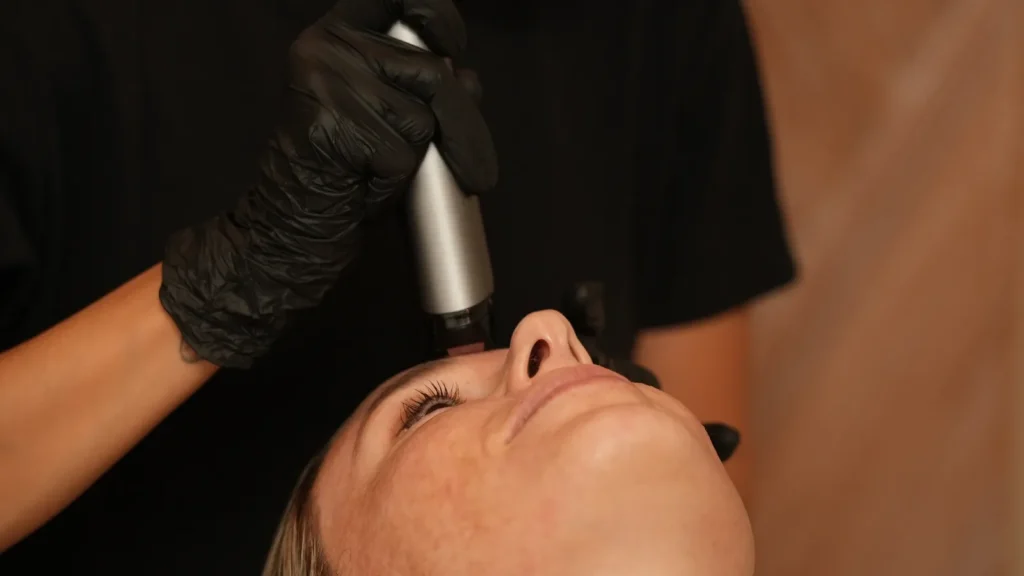
What our clients notice is not a frozen or filled look, but skin that simply looks and behaves healthier, more resilient, better toned, more alive. That steady, visible renewal is what regenerative aesthetics aim for. Because the improvement is your own tissue, it is genuinely yours.
Every person’s biology is different, and outcomes vary from individual to individual. During your consultation we design a protocol suited to your skin, your goals, and your history. That personalized plan is central to how regenerative aesthetics work.
The choice between masking and repairing is, at bottom, a philosophical one, and we made ours deliberately. We would rather give your body the stimulus, the instruction, and the supply it needs to become genuinely younger than paint over the surface of time.
It is a slower promise, and a truer one. If you would like to understand how regenerative aesthetics might work for your skin or scalp, we would be glad to talk with you.
How Soon Will I See Results
Because regenerative aesthetics rebuild your own tissue, changes appear gradually rather than instantly, developing over the weeks after treatment as new collagen forms and blood supply is restored.
A consultation is the best way to set realistic expectations for your skin or scalp.